Improved mobility and range of motion
A home-based, self-implemented, 12 month long program of intense duration stretching by people with muscle weakness and spasticity such as occurs with HSP, has led to:
-
significantly increased walking speed – up an average of 41%
-
significantly increased range of motion in 47% of participants
-
superior results to a similar clinic-based stretching group on a measure of muscle shortening.
Two thirds of the home-based group (8/12) were assessed in a higher functional ambulation (walking) category after 12 months.
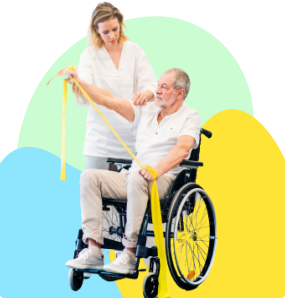
The daily regime involves six, high load, static stretching exercises of at least 15 minutes cumulative duration over the day each… So a minimum of 90 minutes total stretching a day.
If you watch at least 90 minutes of TV a day, you now know where to find the time to implement this program that can provide enormous benefit in mobility and quality of life.

Abstract
BACKGROUND: In current health care systems, long-duration stretching, performed daily, cannot be obtained through prescriptions of physical therapy. In addition, the short-term efficacy of the various stretching techniques is disputed, and their long-term effects remain undocumented.
OBJECTIVE: To evaluate changes in extensibility in 6 lower limb muscles and in ambulation speed after a ≥1-year self-stretch program, the Guided Self-rehabilitation Contract (GSC), in individuals with chronic spastic paresis.
DESIGN: Retrospective study comparing self-stretched and non self-stretched muscles.
SETTING: Neurorehabilitation clinic.
PARTICIPANTS: Patients diagnosed with hemiparesis or paraparesis at least 1 year before the initiation of a GSC and who were then involved in the GSC program for at least 1 year.
INTERVENTIONS: For each patient, specific muscles were identified for intervention among the following: gluteus maximus, hamstrings, vastus, rectus femoris, soleus, and gastrocnemius. Prescriptions and training for a daily, high-load, prolonged, home self-stretching program were primarily based on the baseline coefficient of shortening, defined as CSH = [(XN -XV1)/XN] (XV1 = PROM, passive range of motion; XN = normally expected amplitude).
MAIN OUTCOME MEASUREMENTS: Six assessments were performed per year, measuring the Tardieu XV1 or maximal slow stretch range of motion angle (PROM), CSH, 10-m ambulation speed, and its functional ambulation category (Perry’s classification: household, limited, or full). Changes from baseline in self-stretched and nonself-stretched muscles were compared, with meaningful XV1 change defined as ΔXV1>5° for plantar flexors and >10° for proximal muscles. Correlation between the composite XV1 (mean PROM for the 6 muscles) and ambulation speed also was evaluated.
RESULTS: Twenty-seven GSC participants were identified (14 women, mean age 44 years, range 29-59): 18 with hemiparesis and 9 with paraparesis. After 1 year, 47% of self-stretched muscles showed meaningful change in PROM (ΔXV1) versus 14% in nonself-stretched muscles (P < .0001, χ2). ΔCSH was -31% (95% confidence interval [95% CI] -41.5 to -15.2) in self-stretched versus -7% (95% CI -11.9 to -2.1) in nonself-stretched muscles (P < .0001, t-test). Ambulation speed increased by 41% (P < .0001) from 0.81 m/s (95% CI 0.67-0.95) to 1.15 m/s (95% CI 1.01-1.29). Eight of the 12 patients (67%) who were in limited or household categories at baseline moved to a higher functional ambulation category. There was a trend for a correlation between composite XV1 and ambulation speed (r = 0.44, P = .09) in hemiparetic patients.
CONCLUSION: Therapists should consider prescribing and monitoring a long-term lower limb self-stretch program using GSC, as this may increase muscle extensibility in adult-onset chronic paresis.
SOURCE: PM R. 2018 Mar 2. pii: S1934-1482(17)30422-7. doi: 10.1016/j.pmrj.2018.02.013. [Epub ahead of print] PMID: 29505896 Copyright © 2018 American Academy of Physical Medicine and Rehabilitation. Published by Elsevier Inc. All rights reserved.
Effect on Passive Range of Motion and Functional Correlates After a Long-Term Lower Limb Self-Stretch Program in Patients With Chronic Spastic Paresis.
Pradines M1, Baude M2, Marciniak C3, Francisco G4, Gracies JM5, Hutin E5, Bayle N5.
1 EA 7377 BIOTN, Laboratoire Analyse et Restauration du Mouvement, Université Paris Est Créteil (UPEC), Créteil, Cedex; and AP-HP, Service de Rééducation Neurolocomotrice, Hôpitaux Universitaires Henri Mondor 51 Avenue du Maréchal de Lattre de Tassigny, 94000 Créteil, France. Electronic address: maudprad@gmail.com.
2 EA 7377 BIOTN, Laboratoire Analyse et Restauration du Mouvement, Université Paris Est Créteil (UPEC), Créteil, Cedex; and AP-HP, Service de Rééducation Neurolocomotrice, Hôpitaux Universitaires Henri Mondor, Créteil, France.
3 Department of Physical Medicine and Rehabilitation and Department of Neurology, Northwestern University Feinberg School of Medicine, Chicago, IL.
4 Department of Physical Medicine and Rehabilitation, University of Texas Health Science, Center at Houston (UTHealth), NeuroRecovery Research Center at TIRR Memorial Hermann, Houston, TX.
5 EA 7377 BIOTN, Laboratoire Analyse et Restauration du Mouvement, Université Paris Est Créteil (UPEC), Créteil, Cedex; and AP-HP, Service de Rééducation Neurolocomotrice, Unité de Neurorééducation, Hôpitaux Universitaires Henri Mondor, Créteil, France.